 US Market

Stock Activity:
ALL USD Stocks

Chat Now !

As Pence Hugs Netanyahu in Jerusalem, Abbas Turns to Europe
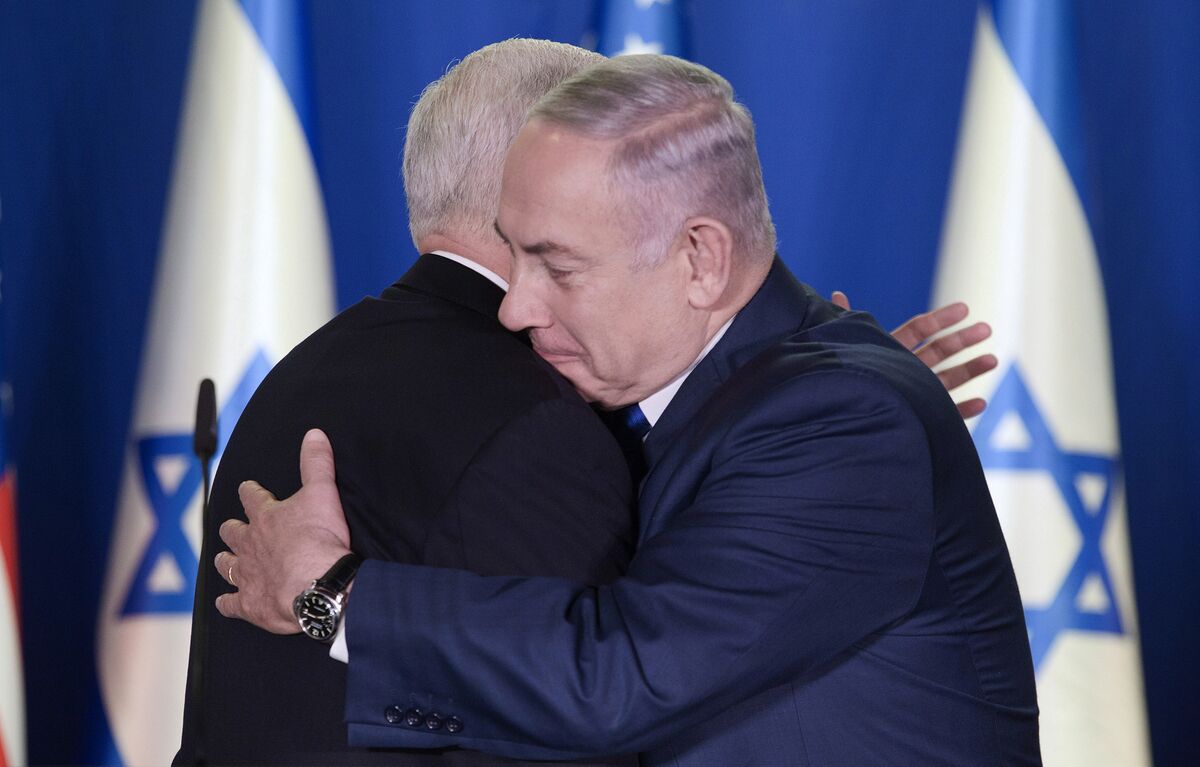
President Donald Trump will transfer the U.S. embassy to Jerusalem next year, Vice President Mike Pence told the Israeli parliament to standing ovations Monday, tightening the administration’s embrace of Israeli Prime Minister Benjamin Netanyahu.
President Donald Trump will transfer the U.S. embassy to Jerusalem next year, Vice President Mike Pence told the Israeli parliament to standing ovations Monday, tightening the administration’s embrace of Israeli Prime Minister Benjamin Netanyahu.
At virtually the same moment in Brussels -- one could toggle between the telecasts -- Palestinian Authority President Mahmoud Abbas was appealing to Europe to recognize a Palestinian state and emerge as an alternative sponsor for Mideast diplomacy.
“In the weeks ahead our administration will advance its plan to open the United States embassy in Jerusalem, and that United States embassy will open before the end of next year,” Pence told the Knesset. Later that evening, before a dinner with their spouses at Netanyahu’s residence, he said how happy he was to be standing in Jerusalem, "capital of the State of Israel."
Few world leaders share Pence’s enthusiasm. Trump’s recognition of the city as Israel’s capital last month sparked protests across the Muslim world and a diplomatic rebuke in the United Nations General Assembly.
The divergent paths on display Monday highlight the impasse in a 25-year-old peace process that has mostly fumbled for progress in the past decade. The Palestinian Authority, which wants the eastern part of Jerusalem as capital of its own future state, has cut off contact with U.S. officials since Trump’s Dec. 6 declaration, boycotting Pence on this trip. Israel, meanwhile, is leery of an initiative led by the European Union, seeing Europe as biased toward the Palestinians.
Trump’s Approach
Pence and Netanyahu sought to emphasize the partnership between their two nations, adopting tougher policy stances together that have broken with international consensus on both the Palestinians and Iran. Netanyahu said time was running out for the world to “fix” the Iran nuclear agreement, and said Israel would “unequivocally” support Trump if he decided to walk away from the deal. On Iran, Netanyahu told the vice president, “you’re on the right side of history.” As Pence thanked Netanyahu for his hospitality, the two briefly embraced.
Pence, an evangelical Christian, peppered his speech at the Knesset with biblical verses tracing Israel’s religious claim to the Holy Land. Invoking the 70th anniversary in May of the Jewish state’s establishment, he recited part of the traditional “Shehecheyanu” prayer of thanksgiving in Hebrew, garnering enthusiastic applause. Even his basic message about the embassy -- next year in Jerusalem -- is a cornerstone phrase of Jewish liturgy.
Palestinians expressed their outrage over the U.S. stance. A brief fracas erupted before Pence addressed the Knesset as Israeli Arab lawmakers, holding signs declaring Jerusalem the capital of Palestine, were wrestled from the chamber by the parliament’s ushers. The previous night, as Pence landed in Israel, Palestinians in the West Bank set fire to posters of the vice president with the words, “Pence Go Home.” A general strike to protest his visit was called for Tuesday in the West Bank.
Read more: Why Jerusalem status is a capital controversy
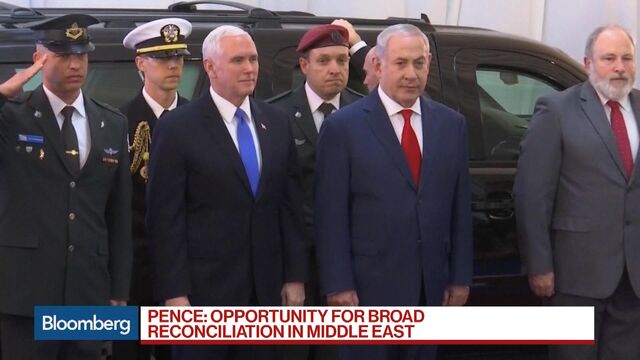

Dov Waxman of Northeastern University says VP Mike Pence is a "polarizing" figure when it comes to Israel.
(Source: Bloomberg)
Quick Retrofit
A new U.S. embassy in Jerusalem could take years to design and construct. The State Department is weighing plans to accelerate the timetable by retrofitting the existing consulate, located in the western part of the city, which was Israeli territory before the 1967 Middle East War.
Pence insisted Trump’s approach would ultimately provide new momentum to peace talks.
“By finally recognizing Jerusalem as Israel’s capital, the United States has chosen fact over fiction – and fact is the only true foundation for a just and lasting peace,” he said.
He noted Trump said the two sides must decide between themselves the boundaries of Israel’s claim to Jerusalem, as well as other contentious issues. He told the Knesset the U.S. supports a two-state solution to the conflict -- provided that’s what the parties themselves want.
Palestine Liberation Organization Secretary General Saeb Erekat described Pence’s speech as “a gift to extremists,” saying on Twitter it had shown the U.S. administration to be “part of the problem rather than the solution.”
Egypt, Jordan, Brussels
Pence arrived in Israel after stops in Cairo and Amman, where he asked Egyptian President Abdel-Fattah El-Sisi and Jordan’s King Abdullah to try to bring Palestinian leaders back to the table, according to a person familiar with the matter.
Abbas, instead, is drawing closer to Europe. Last week he cursed Trump at a PLO Central Council meeting after Erekat presented a purported summary of the emerging U.S. peace plan. American officials said the description of the plan was not accurate.
In Brussels on Monday, Abbas told EU foreign-policy chief Federica Mogherini that there’s “no contradiction” between unilaterally recognizing a Palestinian state and also backing negotiations with Israel. Israel argues the Palestinians should have a path to statehood only through negotiations, or they have little incentive to compromise.
Sweden already has recognized Palestine, and other countries are weighing it. Slovenia is preparing to recognize a Palestinian state next month, the Delo newspaper reported Monday, citing the country’s foreign minister. Debates on recognition are taking place in Portugal, Ireland, Belgium and Luxembourg, the Slovenian newspaper reported.
Mogherini held out the idea of joint U.S.-European sponsorship of the diplomatic process.
“There is a space for a common effort, and I believe this could be done in the coming months,” she told reporters Monday. “We are both looking for ways to restart the engine of negotiations.”
— With assistance by Anna Edney, Fadwa Hodali, David Wainer, Jonathan Stearns, and Boris Cerni