 US Market

Stock Activity:
ALL USD Stocks

Chat Now !

Can Trump Fire the Special Counsel? Not Directly
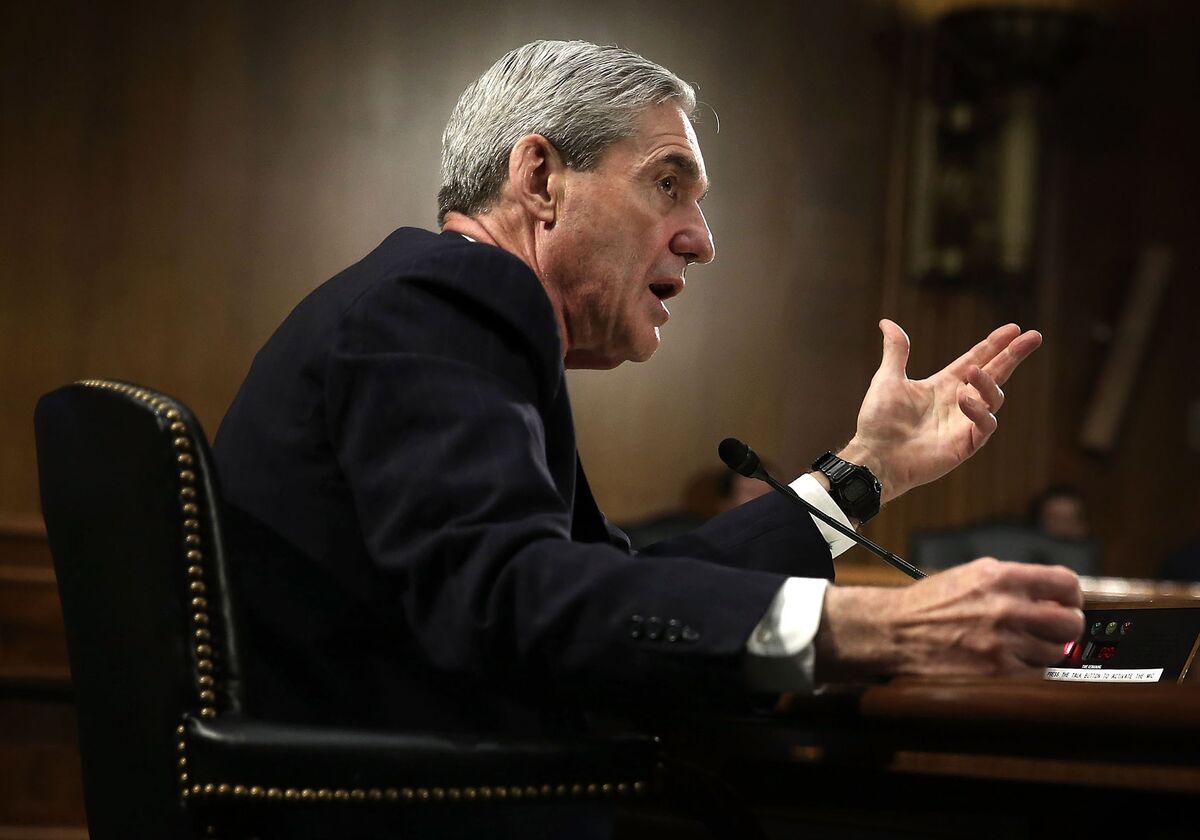
President Donald Trump has said he doesn’t intend to fire Robert Mueller, the special counsel whose investigation of Russian meddling in the 2016 campaign has spilled over to Trump’s associates and perhaps the president himself. But Trump tried to do exactly …
President Donald Trump has said he doesn’t intend to fire Robert Mueller, the special counsel whose investigation of Russian meddling in the 2016 campaign has spilled over to Trump’s associates and perhaps the president himself. But Trump tried to do exactly that last year, according to news reports. A special counsel -- a lawyer from outside of government named by the Justice Department to take over a sensitive investigation -- is granted a level of independence and autonomy. But the position isn’t untouchable.
1. Can a president fire a special counsel?
Not directly. Special counsels answer to the Justice Department official who appoints them. Usually that means the attorney general. In Mueller’s case, it’s the deputy attorney general, Rod Rosenstein. That’s because Attorney General Jeff Sessions, having advised and supported Trump’s 2016 campaign, recused himself from overseeing the inquiry.
2. So only Rosenstein can fire Mueller?
Technically correct, and only upon finding “misconduct, dereliction of duty, incapacity, conflict of interest" or "other good cause.” Rosenstein has said, as recently as Dec. 13, that he sees no such reason to dismiss Mueller. Short of firing the special counsel, Rosenstein could reel in the investigation by finding one of more of its strategies or techniques "so inappropriate or unwarranted under established departmental practices that it should not be pursued." But Rosenstein has given no indication that he’s contemplating this step, either. The 1999 rule establishing the position says a special counsel is supposed to "not be subject to the day-to-day supervision of any official of the department."
3. Does that leave Trump any options?
Yes. Trump could order Rosenstein to fire Mueller, fire Rosenstein if he refuses, then repeat the process with the official who would be elevated to fill Rosenstein’s position. If that person also refuses, Trump could repeat the process through the line of succession until someone does as he says. This is largely what happened in the "Saturday Night Massacre" of 1973, when President Richard Nixon ordered three Justice Department officials to fire the Watergate special prosecutor until one finally agreed. In another scenario, Trump could fire Sessions, with the expectation that Sessions’ successor would seize control of the case from Rosenstein -- and fire Mueller. Under yet another scenario, Trump could order the repeal of the special-counsel regulations, then fire Mueller himself.
4. Would firing Mueller end the Russia investigation?
Not necessarily. The investigation predated Mueller’s appointment as special counsel and already has some prosecutions underway. If Mueller were to be dismissed, much would depend on his successor -- who would, presumably, be appointed by Rosenstein.
5. Is anyone trying to protect Mueller?
Yes, but without much legislative progress. Senators have proposed two bills that would empower a panel of judges to have the final say on whether proper cause exists to fire a special counsel. Both bills have raised constitutional questions, and both face an uphill battle just to get to the Senate floor for a vote.
6. What would happen if Mueller were fired?
He could sue to challenge the grounds for his dismissal. Beyond that, much of the fallout would depend on Trump’s fellow Republicans in Congress, who hold majorities in the House and the Senate. Democrats could be expected to express their outrage by offering proposals to reinstate Mueller and to remove Trump as president, on grounds that he had obstructed justice. But Democrats couldn’t accomplish that on their own. Republican Senator Lindsey Graham warned that if Trump tries to fire Mueller, "it would be the end of his presidency." But many other Republicans are far more critical of Mueller than protective.
7. Could Trump be impeached for firing Mueller?
Since removing a president is a political process, not a legal one, that question is up to Congress. The Constitution says the president (and vice president and judges and members of the cabinet) "shall be removed from office on impeachment for, and conviction of, treason, bribery, or other high crimes and misdemeanors." The key phrase "high crimes and misdemeanors" has been defined by Congress through the years to include exceeding or abusing the powers of the presidency or misusing the office for improper purpose or gain.
The Reference Shelf
- QuickTake Q&As on the twists and turns of the Trump-Russia story and what to know about impeachment.
- Bloomberg View’s Cass R. Sunstein on the prospect of Trump testifying under oath.
- If Trump fires Mueller, he must be impeached, argues The Nation.
- The fine print on the special counsel’s powers.
- The Congressional Research Service defines independent counsels, special prosecutors and special counsels.