 US Market

Stock Activity:
ALL USD Stocks

Chat Now !

Deutsche Bank Revenue at Seven-Year Low on Cryan’s Groundhog Day
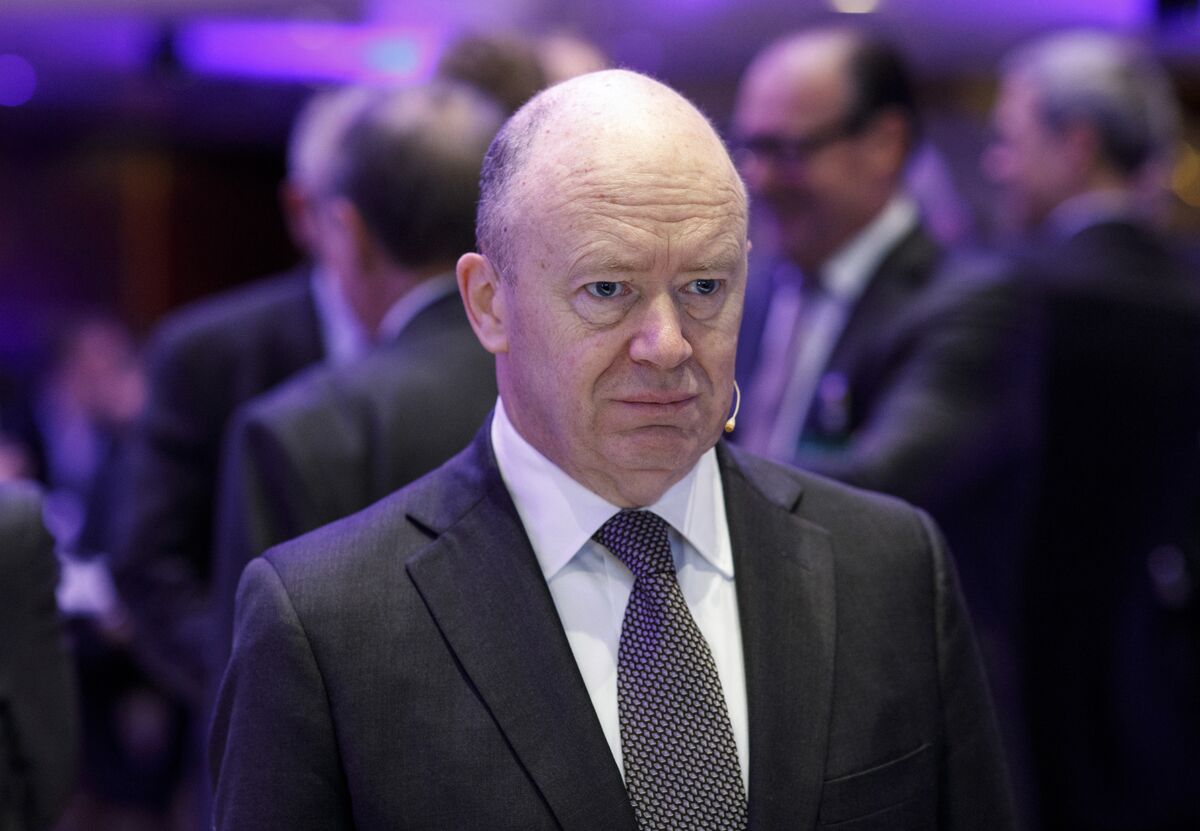
It’s Groundhog Day for John Cryan.
It’s Groundhog Day for John Cryan.
Exactly a year ago, the chief executive officer of Deutsche Bank AG reported his second consecutive annual loss, the worst revenue in years and signs of improvement. Germany’s largest lender just closed out another year in the red, with revenue that declined to the lowest in seven years in the fourth quarter. Cryan is still holding out hope.
“We believe we are firmly on the path to producing growth and higher returns with sustained discipline on costs and risks,” Cryan said in a statement Friday. “We have made progress, but we are not yet satisfied with our results.”
It Keeps Shrinking
Deutsche Bank's revenue has fallen in eight out of ten quarters since Cryan took over
Source: Company filings
Note: Year-on-year percent change in net group revenue

Investors were unconvinced. The shares fell as much as 6.3 percent in Frankfurt, the most since July, and were 5.3 percent lower at 13.9 euros as of 9:15 a.m. local time.
Cryan, 57, is running out of time to show he can lead Europe’s largest investment bank back to strength, after more than two years of scaling back risk, improving controls and settling legacy misconduct cases. The cerebral Brit has defended his strategy, saying two weeks ago that his turnaround plan had entered a “third phase” in which growth should finally be restored and on a conference call on Friday that client activity picked up in January.
The CEO raised capital in the past year, reorganized the bank’s divisions, prepared the asset management arm for a partial public offering and is working to re-integrate the Postbank consumer lending unit. Yet several of his shareholders, penalized by the worst performance among European bank stocks in the past year, have signaled they may stop backing him if the numbers don’t improve soon.
Bottom of the Class
Deutsche Bank is the worst performer over 12 months in the BE500 Banks & FS Index
Source: Data compiled by Bloomberg
Note: Share performance in percent over past 12 months by selected constituents of Bloomberg Europe 500 Banks & Financial Services Index as at February 1, 2018

To be fair, much of what’s driving the ongoing slump in revenue -- a lack of volatility in markets, writedowns tied to the U.S. tax reform -- is beyond the control of the CEO, and has driven comparable results at the bank’s U.S. peers. Goldman Sachs Group Inc.’s fixed-income unit turned in its worst performance in more than a decade last quarter, with a slump of 50 percent.
Deutsche Bank’s results included a charge of 1.4 billion euros ($1.8 billion), flagged last month, to reflect a lower value of its deferred tax assets following the reform of the U.S. corporate tax. The lender at that time also said it would probably post a full-year loss. Going forward, the change in tax rate should have a positive impact on net income, it said.
Overall trading revenue at the investment bank, excluding financing, declined 27 percent, Deutsche Bank said.
The bank scrapped its cost target for this year, saying it expects expenses of 23 billion euros, compared with an earlier estimate of 22 billion euros. The earlier target included 900 million euros of cost savings to be achieved through business sales that the company said had been delayed or suspended. The lender also said it plans to conduct the initial public offering of its asset management unit, known as DWS, as soon as possible.
Groundhog Day is celebrated Feb. 2 in North America, when, according to tradition, the groundhog comes out of hibernation. In the 1993 movie, “Groundhog Day,” Bill Murray plays a television weather forecaster who relives the same day over and over.
Other highlights from Deutsche Bank’s fourth-quarter earnings:
- Full-year net revenue of 26.4 billion euros; estimate was for 27.26 billion euros
- 4Q net revenue EU5.71 billion, lowest since 2010
- 4Q sales and trading revenue EU886 million, down 27 percent
- 4Q loss 2.18 billion euros; estimate was for loss 2.24 billion euros
- 4Q common equity Tier 1 ratio 14 percent
- 4Q equity trading revenue 332 million euros
- 4Q debt trading revenue 554 million euros
- FY loss after tax 512 million euros
- Sees 2018 restructuring costs similar to 2017
- Sees 2018 credit costs, litigation costs rising
- Sees rate normalization enabling improved revenue
- Increase in adjusted costs is expected to be more than offset by revenues retained due to the delayed or suspended disposals