 US Market

Stock Activity:
ALL USD Stocks

Chat Now !

Erdogan Decree Stokes Fears of Legalized Extra-Judicial Violence
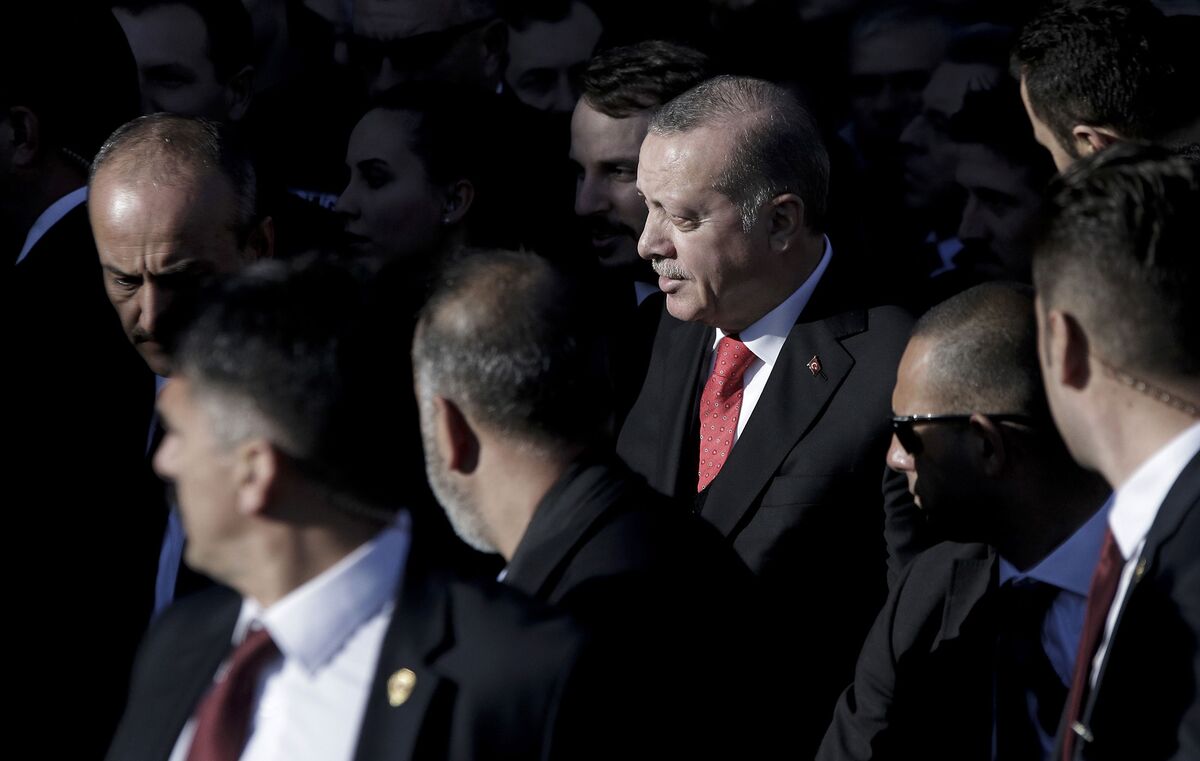
Turkish President Recep Tayyip Erdogan’s latest emergency decree risks inciting political violence by giving legal cover to pro-government vigilantes, opposition parties and legal authorities warned.
Turkish President Recep Tayyip Erdogan’s latest emergency decree risks inciting political violence by giving legal cover to pro-government vigilantes, opposition parties and legal authorities warned.
The act, declared in the Official Gazette on Sunday, grants sweeping immunity for acting against terrorism or attempts to overthrow the government. Civilians won’t face legal consequences for actions against last year’s coup attempt -- or more importantly -- anything that could be considered its “continuation," the decree said.
Erdogan and his allies regularly accuse political opponents of furthering the agenda of coup plotters, raising concern - and fear - about how broadly the decree will be interpreted. Opposition parties led by the Republican People’s Party, or CHP, said the measure provides immunity not just to those who fought back a failed coup attempt by a faction of the military in July 2016, but to supporters of the government intent on stifling political dissent.
No Consequences
“They’ve paved the way for anyone who claims to be fighting against terrorism to slaughter everybody else,” Ozgur Ozel, a CHP parliament whip, said in televised remarks in the western province of Manisa. “They will unleash vigilantes on us in a future democratic rally and will face no charges.”
Ozel’s comments were echoed across Turkey’s normally fractured opposition spectrum. Meral Aksener, a former interior minister who leads the newly established Iyi Party, said in a Twitter post that the decree risks dragging Turkey into a civil war by allowing civilians to use weapons on the pretext of suppressing rebellion. It also legitimizes use of paramilitary forces, according to Ziya Pir, a lawmaker with the pro-Kurdish party HDP.
Cevdet Yilmaz, deputy chairman of the ruling AK Party, said citizens who weren’t involved in terrorism have nothing to worry about.
“We are taking whatever steps are necessary for the security of our people and our country,” he said at a press briefing in Ankara on Monday. “It’s AKP’s mission to make sure that the will of the nation remains supreme and therefore it is out of question for AKP to restrict the democratic field."
Lawyers ‘Horrified’
Metin Feyzioglu, head of the national bar association, said in a video posted on Facebook that he was “horrified” in reading the law, which he said appears designed to exempt political violence by pro-government actors from legal consequences. He called on Erdogan to immediately retract it.
“People on the streets are going to start shooting one another in the head,” Feyzioglu said, addressing Erdogan directly. “You just passed a law that allows citizens to kill one another, to lynch one another, without any punishment or compensation -- what have you done?”
Sunday’s decrees add to a long list of government decisions issued under the state of emergency declared after last year’s failed putsch. Emergency rule allows Erdodgan to govern with decrees that carry the force of law, bypassing parliamentary and judicial oversight. The head of Turkey’s top court said earlier this year that the court has no authority to rule on the legality of emergency measures.
Prime Minister Binali Yildirim said after imposition of the state of emergency last year that it would never be used for decisions related to economic policies, but that also hasn’t been the case. The latest batch of decrees included several economic measures, among them an executive order allowing the transfer of a majority stake in state-run lender Turkiye Vakiflar Bankasi TAO from the state foundation that owned it to the Treasury.
A spokesman for Yildirim’s office declined to comment when contacted by phone on Monday. The office of presidential spokesman Ibrahim Kalin, who’s accompanying Erdogan on a trip to Sudan, also said it couldn’t immediately respond to opposition criticism of the measure.