 US Market

Stock Activity:
ALL USD Stocks

Chat Now !

Fatal Amtrak Crashes Spotlight Delayed Safety Equipment Upgrades
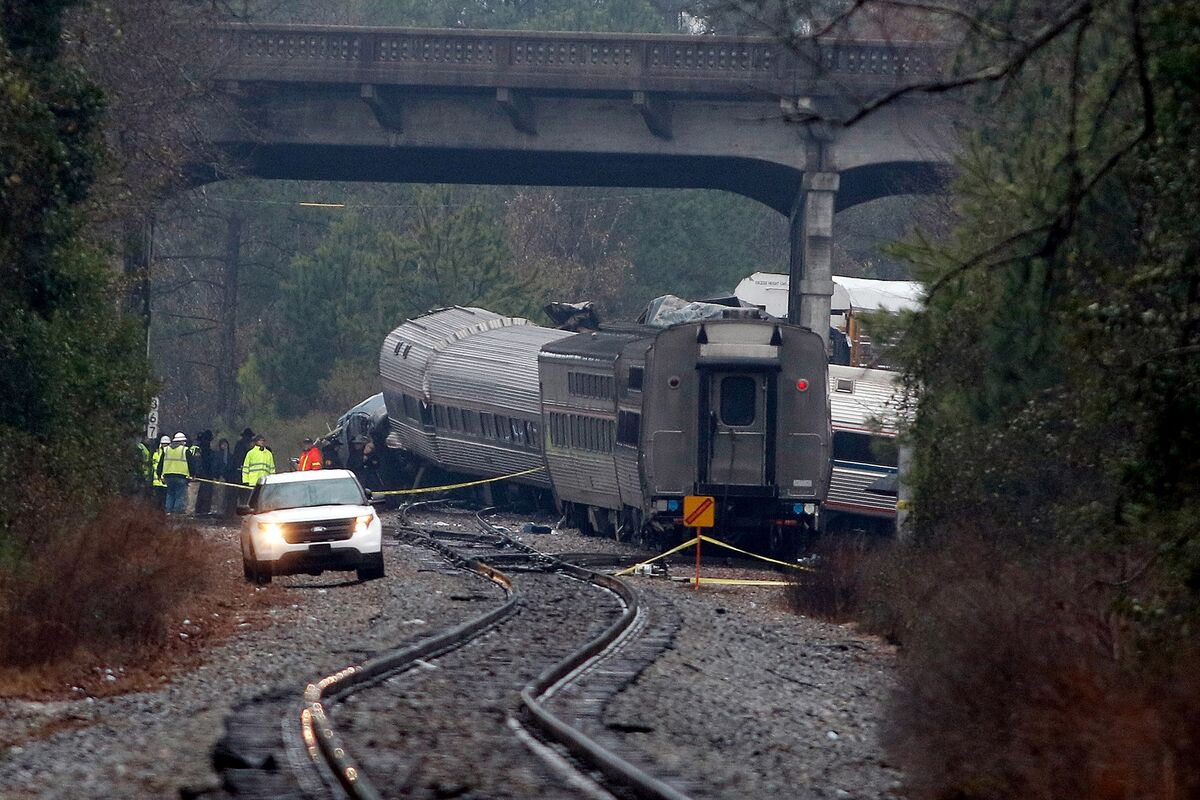
The third fatal Amtrak crash in less than two months has thrown a spotlight on delays installing congressionally mandated technology designed to automatically slow trains and prevent collisions.
The third fatal Amtrak crash in less than two months has thrown a spotlight on delays installing congressionally mandated technology designed to automatically slow trains and prevent collisions.
A collision Sunday outside Columbia, South Carolina, between passenger and freight trains would not have happened if that section of track had been equipped with Positive Train Control, said Robert Sumwalt, chairman of the U.S. National Transportation Safety Board. Two Amtrak employees died and scores were injured in the impact.
The NTSB said the same thing after an Amtrak train derailed near DuPont, Washington, on Dec. 18 when an engineer failed to slow down for a curve, killing three people. PTC would have sensed where the train was and automatically slowed before it reached the curve.
“People are dying,” U.S. Representative Sean Maloney, a New York Democrat, said in a statement. “We can’t wait any longer on getting PTC systems up and running nationwide. Congress has delayed this deadline time and again and we’ve seen the deadly results.”
Related: Amtrak Crash Adds to CSX’s Rising Accident Toll Amid Turnaround
But despite NTSB’s decades-long calls for the system, and Congress in 2008 mandating it by 2015 on safety-critical sections of track, many railroads are still years away from completion. In late 2015, when it became clear that railroads wouldn’t meet that deadline, lawmakers extended the deadline until 2018. Some railroads will be able to get an extension until 2020.
The other fatal Amtrak crash occurred Wednesday in Virginia when a train carrying Republican lawmakers struck a trash truck driving across a grade crossing. An occupant of the truck died. The PTC systems mandated by Congress can’t detect vehicles at a grade crossing, so it wouldn’t have prevented that accident. However, some similar systems do monitor grade crossings, such as a section of Amtrak rail in Michigan.
PTC, which is expected to cost more than $10 billion, has proven more complex than expected as railroads separately build systems that must operate when one company operates on another’s tracks, Jeff Young, a consultant with the Association of American Railroads said in a post on the trade group’s website.
Related: Engineer in Fatal Amtrak Crash Didn’t Realize Curve Was Up Ahead
“That has required making substantial upgrades to the four main segments of freight rail operations: the back office server, locomotives, wayside signals and communications components,” Young said. “The complexity and scope of this has revealed numerous issues in each of the areas that need to be identified and corrected through extensive testing.”
Railroads have at times been their own worst enemy developing PTC, said Steven Ditmeyer, a former official at the U.S. Federal Railroad Administration who teaches rail management at the University of Delaware.
PTC tracks every train’s location and can automatically slow or stop a train if there’s a speed restriction or obstruction ahead. It can also be a huge efficiency boon, allowing trains to operate closer together and speeding arrivals, according to Ditmeyer and a 2004 FRA study.
Railroads could save from $937 million to $2.1 billion a year with PTC, the study found.
Earlier: Train Carrying GOP Lawmakers Strikes Truck, Killing Motorist
“Most of the railroads have ignored the business benefits that can derive from this technology,” Ditmeyer said. That has, in turn, created incentives that have slowed its introduction, he said.
Whether the latest accidents will push PTC into operation sooner is an open question.
Ausustine Ubaldi, an engineer at Robson Forensic Inc. in Ohio who has worked on large railroad infrastructure projects, predicted there will be growing pressure by lawmakers to install the system. But it would be a mistake to move simply for political reasons, Ubaldi said.
The complexities that have delayed its installation are legitimate and railroads should be allowed to use simpler technology, he said. In addition, PTC won’t prevent some railroad accidents, such as derailments due to defective tracks.
“I don’t want people to think it’s a magic bullet and we won’t ever have enough another train derailment as soon as PTC goes into service,” Ubaldi said.
CSX Corp., which owns the track on which the Amtrak hit a parked CSX freight train on Sunday, has installed the hardware for PTC on about half of its required track and will be finished the end of this year, said Chief Financial Officer Frank Lonegro on a Jan. 16 conference call with analysts. That puts the company on schedule to have the system operating by the 2020 deadline, he said.
— With assistance by Thomas Black