 US Market

Stock Activity:
ALL USD Stocks

Chat Now !

Goodbye DMZ? What an End to the Korean War Would Mean
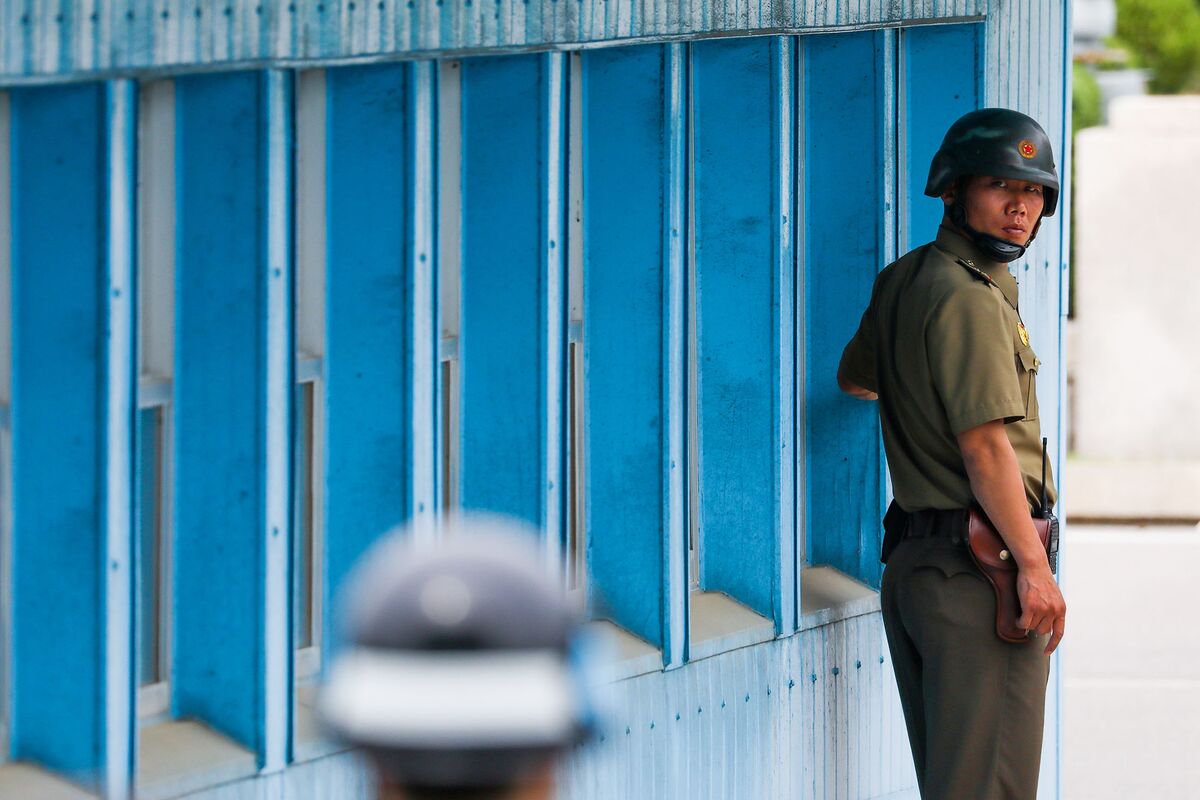
As neighborly disputes go, this one really has dragged on. Some 65 years since open hostilities ended, North and South Korea are still technically at war. But after a sudden warming of relations this year, the two sides are set to meet at the end of this mont…
As neighborly disputes go, this one really has dragged on. Some 65 years since open hostilities ended, North and South Korea are still technically at war. But after a sudden warming of relations this year, the two sides are set to meet at the end of this month for talks. According to the South Korean publication, Munhwa Ilbo, they’re planning to announce the end of military hostilities. Negotiations may focus in part on one of the most enduring symbols of the conflict, the 4-kilometer-wide (2.5-mile) stretch of land separating the countries known as the demilitarized zone. Peace lovers and bird lovers alike are watching with interest.
1. What is the demilitarized zone?
The DMZ, as it’s known, was created at the end of the 1950-53 Korean War, when the United Nations (including the U.S.), China and North Korea signed an armistice, signaling a temporary cessation of fighting, rather than a full-blown peace treaty. Under the terms, the parties undertook to pull troops back from a military demarcation line by 2 kilometers each way (hence the buffer of 4 kilometers). South Korea refused to sign the armistice. According to Munhwa Ilbo, which cited an unidentified South Korean official, a joint statement from the coming summit may state that the two Koreas will seek to ease military tension, which could involve returning the DMZ to its “original state.”
2. Where will the talks take place?
Within the DMZ, in the so-called Joint Security Area, which is also known as Panmunjom, or Truce Village. Several buildings stand on either side of the military demarcation line, including Peace House, which lies on the southern side of the zone and will host the upcoming talks. (There is a building built directly on the line which houses a table that has a line running down the center to show the demarcation line.) U.S. President Donald Trump had to cancel a trip to the DMZ in November because of bad weather, but as yet there’s no suggestion his proposed meeting with North Korean leader Kim Jong Un would take place there.
3. What else is there in the DMZ?
Wildlife. The snaking 250-kilometer swath of land has remained untouched by humans, leaving what National Geographic magazine once described as a haven for some of the most endangered animals in Asia, including black bears, musk deer and rare birds and plants.
4. What is on either side of the DMZ?
Lots of troops and artillery weapons. U.S. and South Korean military personnel patrol the south side of the DMZ and North Korean soldiers guard the north. North Korea has spent decades concealing hundreds of artillery batteries along the frontier that could wreak havoc on South Korea’s capital Seoul, home to half the country’s 51 million people. Seoul lies about 60 kilometers to the south. South Korea has its own artillery primed. Both sides have mounted giant loud speakers to blast propaganda -- and the occasional K-Pop hit from South Korea -- at each other.
5. Has the DMZ remained skirmish-free?
Hardly. Outbreaks of violence over the years have killed hundreds of troops from North Korea, South Korea and the U.S. More than 30,000 American soldiers are deployed in South Korea as part of the U.S.-South Korean alliance. One of the most gruesome incidents involved ax-wielding North Korean soldiers attacking and killing two U.S. Army soldiers in 1976. In 2015, two South Korean soldiers were injured by landmines allegedly placed on the south side of the DMZ by North Korea.
6. What would happen to the DMZ?
If returned to its “original state,” the zone would presumably cease to exist and the military demarcation line would become the border. Troops would be pulled back, along with the artillery and other weapons.
7. When did the countries last come this close to peace?
At the 2007 summit between President Roh Moo-hyun and Kim Jong Il in Pyongyang. The sides settled on dozens of agreements aimed at supporting North Korea’s economy and recommitted to a declaration made at a summit in 2000 -- the first between leaders of North Korea and South Korea -- that the two sides would seek peaceful reunification.
8. Why did relations deteriorate after 2007?
Negotiations -- known as the “six-party talks” -- broke down in 2008 after North Korea refused to allow international inspectors to visit nuclear facilities. Around the same time, South Korea elected a conservative president, Lee Myung-bak, who favored a harder line and abandoned his predecessor’s so-called "Sunshine Policy" toward North Korea. The sinking of a South Korean corvette, killing 46 sailors, by a suspected North Korean torpedo prompted the newly elected president to cut off all ties with the North.
The Reference Shelf
- QuickTakes on the upcoming Trump-Kim meeting and North Korea’s nuclear weapons program.
- A Bloomberg infographic considers the range of North Korea’s missile threat.
- North Korea’s 10 deadliest provocations since the Korean War.
— With assistance by Peter Pae