 US Market
Stock Activity:
ALL USD Stocks

Chat Now !

`Instability' Discount Builds for Investors After Cohn Resigns
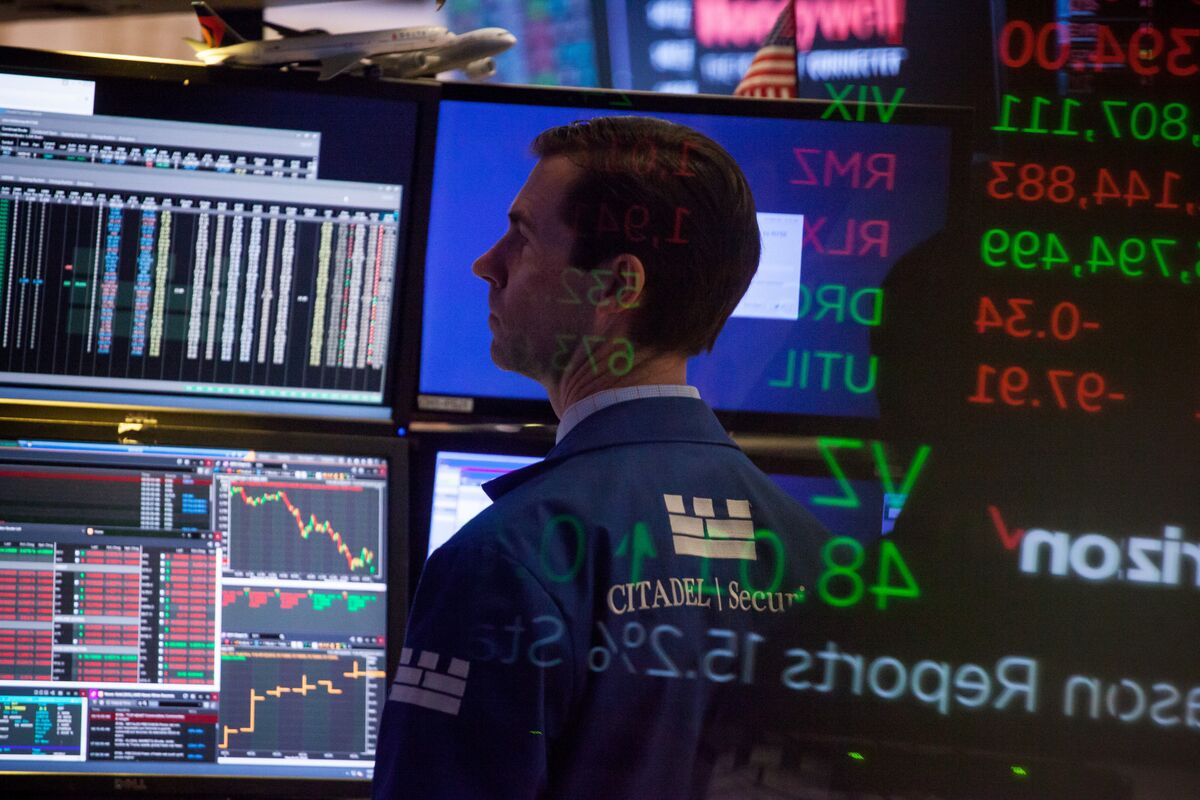
Peace proved fleeting in U.S. stocks as investors fretted Gary Cohn leaving the Trump administration prunes it of a key force for stability just as signs of a trade war multiply.
Peace proved fleeting in markets as investors fretted Gary Cohn leaving the Trump administration prunes it of a key force for stability just as signs of a trade war multiply.
U.S. stock futures were on the brink of erasing two days of gains after the former Goldman Sachs Group Inc. executive said he was stepping down as President Donald Trump’s top economic adviser. For traders, it promised another round of turbulence after everything from rising bond yields to the threat of a trade caused share volatility to double over the last month.
“I can’t believe this is happening,” Michael Purves, Weeden & Co.’s chief global strategist, said by phone. “I wrote up Cohn’s departure this morning as a real risk to consider. I thought it’s like a 35 percent probability event. I was just amazed that Trump is letting this happen.”
Contracts on the S&P 500 Index fell 1.1 percent as of 6:44 p.m. in New York. Futures on the Dow Jones Industrial Average declined 1.4 percent, while those on the Nasdaq 100 Index declined 1.2 percent. The S&P 500 had risen for three straight days into Tuesday’s close, adding almost 2 percent.
“A lot of people saw him as a calming influence to the Trump administration,” said Nick Twidale, Sydney-based chief operating officer at Rakuten Securities’ Australian unit. “Now he’s gone, there’s that perception that maybe they’re letting loose the hardline aspects of the Trump administration to go even harder on protectionism.”
The president’s announcement last Thursday that he would press forward with a 25 percent tariff on steel imports and 10 percent on aluminum left markets reeling and served as a public rebuke of Cohn, the director of the National Economic Council, who had furiously lobbied against the penalties.
“Policy uncertainty has underpinned a lot of the market’s recent volatility,” Stephen Wood, chief market strategist for North America at Russell Investments in New York, said by phone. “This speaks to the instability. He’s an advocate for free trade policy so there would be expectation that protectionist voices would be more representative in the administration.”
The move came as people familiar with the matter said the Trump administration is considering clamping down on Chinese investments in the U.S. and imposing tariffs on a broad range of its imports to punish Beijing for its alleged theft of intellectual property.
“Of all the Trump Administration resignations, this will be the one most meaningful for markets,” said Michael O’Rourke, chief market strategist at JonesTrading Institutional Services. “Cohn was the administration official financial markets had the most confidence in. This opens the environment up to whole new wave of uncertainty. The likelihood of a trade war just jumped dramatically.”
— With assistance by Matthew Burgess