 US Market

Stock Activity:
ALL USD Stocks

Chat Now !

Investors Offload Russia as U.S. Sanctions Spook Bond Market
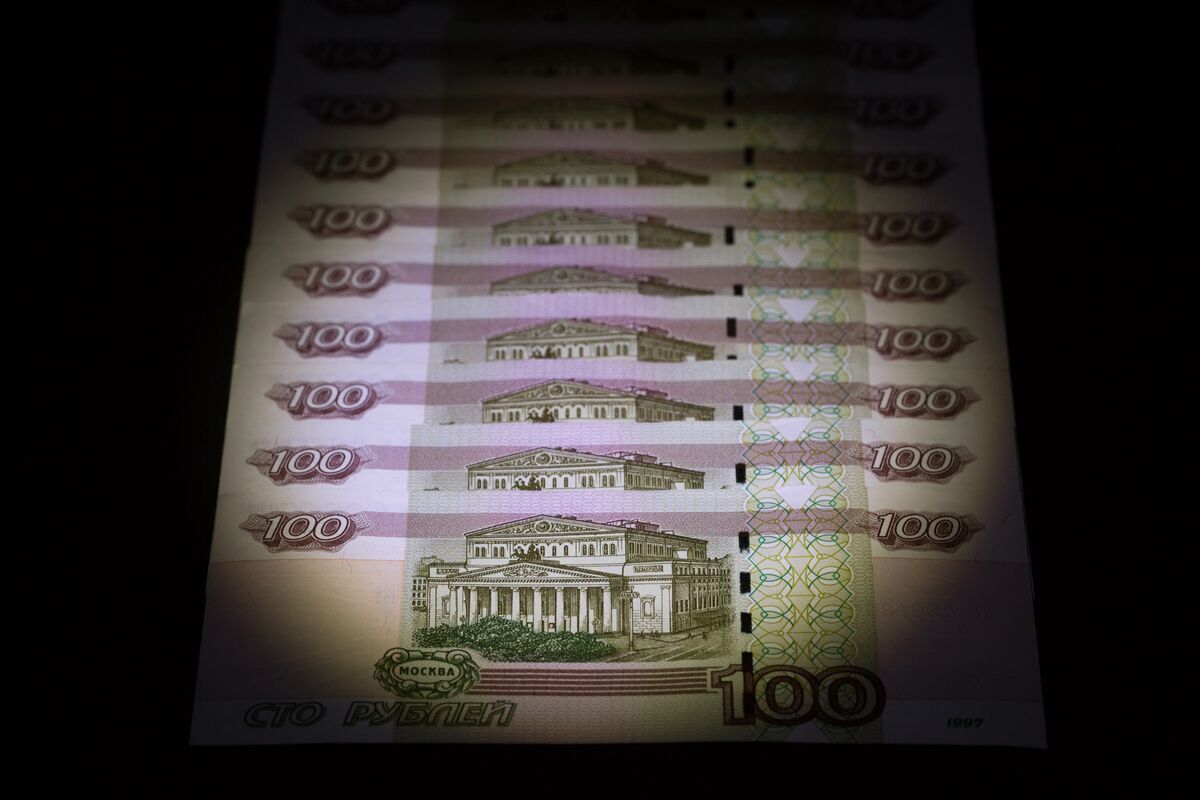
Russia’s ruble extended its slump and borrowing costs surged as bond investors offloaded holdings amid a wave of uncertainty created by the latest round of U.S. sanctions.
Russia’s ruble extended its slump and borrowing costs surged as bond investors offloaded holdings amid a wave of uncertainty created by the latest round of U.S. sanctions.
The currency slumped to its lowest level since November, extending a slide this week to almost 8 percent. Yields on ruble debt jumped to the highest level in four months, while investors pulled money from an exchange-traded fund that tracks the bonds.
The harshest U.S. penalties on Russia yet have left investors guessing about future targets, spurring them to unload long positions built up in ruble assets over recent months. Foreigners held about 34 percent of Russia’s local-currency sovereign bonds before the selloff, a record share, according to central bank data.
“The market was caught off guard, with many funds overweight Russian stocks, bonds and currencies,” said Morgan Harting, a portfolio manager at AllianceBernstein LP in New York. “It may be that keeping the rationale vague is part of the U.S. strategy -- leaving investors more uncertain about what comes next and more apprehensive about doing business in Russia.”
Read More: SocGen Doubles Down on Ruble-Rand Trade That Hit Target Early
Adding to the concern is a bill proposed in Congress last week that would ban the purchase of Russian sovereign bonds. The U.S. Treasury strongly recommended not pursuing such action in a report in February, saying it would be too damaging to U.S. investors and global asset managers.
Russia’s Finance Ministry canceled its weekly bond auction for the first time since the oil price crash in 2015. Auctions will resume when the market stabilizes, the ministry said in a statement late on Tuesday, adding that it doesn’t expect the increased volatility to last for long.
The ruble was down 1 percent to 64.345 per dollar at 10:54 a.m. in Moscow, trimming an earlier loss of as much as 2.7 percent. The yield on 10-year ruble bonds was up 9 basis points at 7.68 percent. The cost of insuring Russian dollar debt against default jumped to the highest since August.
The iShares JP Morgan EM Local Government Bond ETF, which lists Russia as one of its biggest components, suffered its biggest outflow since October on Tuesday.
The latest U.S. penalties, announced on Friday, are notably worse than earlier ones because they specifically bar any trading of securities of targeted companies rather than just blocking their access to new international fundraising.
“All Russian companies could potentially be at risk, and the impact could be quite substantial,” said Stephane Monier, chief investment officer at Bank Lombard Odier & Co Ltd. in Geneva. “This represents a material risk for bondholders.”
— With assistance by Filipe Pacheco