 US Market
Stock Activity:
ALL USD Stocks

Chat Now !

‘It's Becoming Childish’: Investors React to Trump’s Tariff Talk
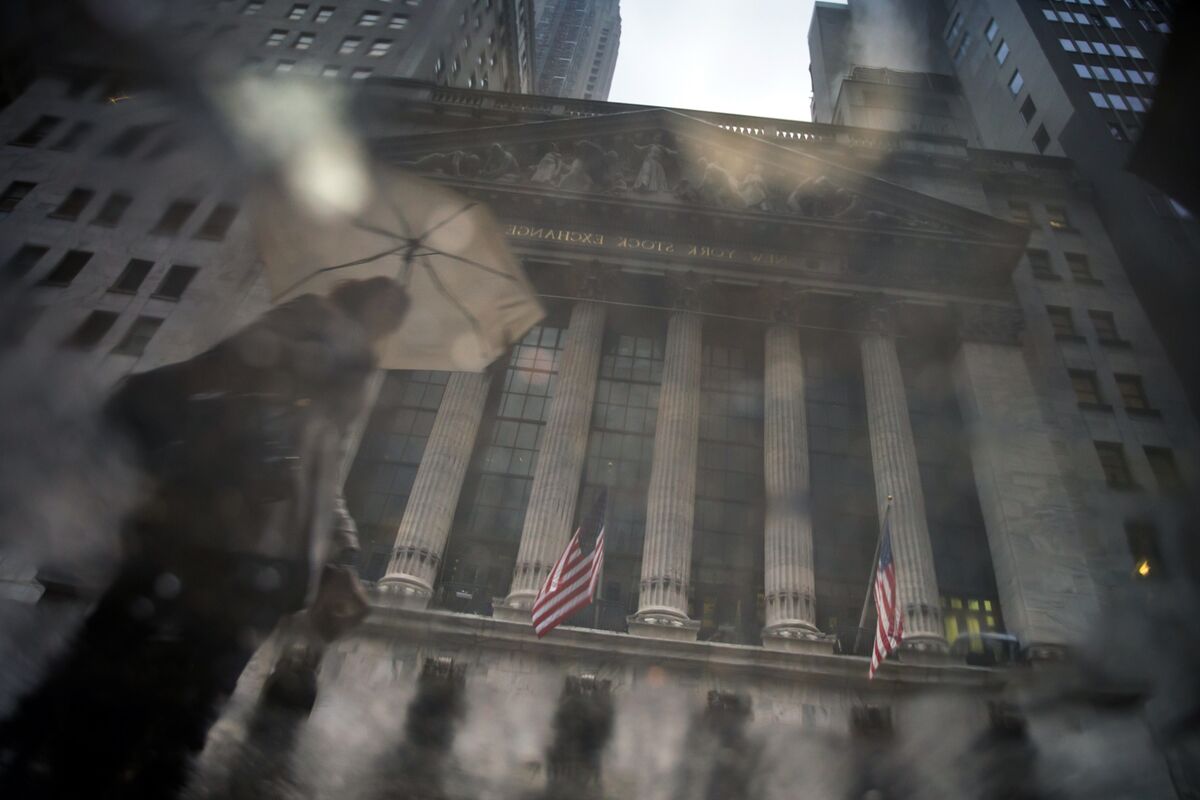
Just when investors thought stock markets across the globe had calmed before the weekend, Donald Trump urged his administration to impose tariffs on an additional $100 billion in Chinese imports.
Just when investors thought stock markets across the globe had calmed before the weekend, Donald Trump urged his administration to impose tariffs on an additional $100 billion in Chinese imports.
While U.S. stock-index futures tumbled after Trump’s move, investor reaction in equity markets across Asia wasn’t as big. Japan’s Topix index fluctuated between small gains and losses and South Korea’s Kospi index slipped 0.3 percent. Hong Kong’s Hang Seng Index rose as much as 1.6 percent after a holiday Thursday. China’s stock and currency markets are shut until Monday due to its annual tomb-sweeping holidays.
“It’s becoming childish,” said Nader Naeimi, Sydney-based head of dynamic markets at AMP Capital Investors Ltd. “At some point investors will say enough is enough, there’s just too much political volatility now.”
GLOBAL REACT: Tariff Talk Is Cheap, Trade Wars Are Expensive
Just Noise
“The reality is that the fundamental backdrop for markets hasn’t changed,” said Kerry Craig, Melbourne-based global market strategist at JPMorgan Asset Management. It will be increasingly important for investors to know what stocks they own as fraying trade relations will lead to more market volatility, he added.
“The noise is distracting when nothing else is happening, a solid 2Q earnings season in the U.S. could see investors refocus on fundamentals and the corporate outlook,” Craig said.
Up at 3 a.m.
“I get up up everyday to write my note and it turns completely in opposite direction. I am getting up more often than not at 3 a.m.,” said Stephen Innes, head of trading for Asia Pacific at Oanda Corp.
“There is a perception of overvaluation in equities markets. Currency markets do not care about trade war, they care about central banks. They will care when there is some timeline, some proof to the pudding.”
De-Sensitized
“One should not be surprised to find markets growing increasingly de-sensitized to such talks,” said Jingyi Pan, a market strategist at IG Asia Pte.
Read more: Stock Picker Says Bring on the Trade War as Trump Ups Rhetoric
A Bluff
“I continue to believe the trade war won’t happen in the end. I think it’s more like bluffing. That’s typical Trump. I read one of his books and he said he’d always act unpredictable before negotiation so he could get more bargaining power,” said Kenny Wen, strategist at Everbright Sun Hung Kai Co.
“No date has been fixed on this. It’s a complete bluff ahead of the negotiations," Norihiro Fujito, a senior strategist at Mitsubishi UFJ Morgan Stanley Securities Co.
Asean Favour
“We expect Asean markets – in particular Singapore and Thailand - to continue to outperform due to to their low listed equities revenue sensitivity to the U.S.,” said Jonathan Garner, strategist at Morgan Stanley.
— With assistance by En Han Choong, Moxy Ying, and Min Jeong Lee