 US Market

Stock Activity:
ALL USD Stocks

Chat Now !

Kushners’ N.J. Towers Get New Life After Meeting With Mayor
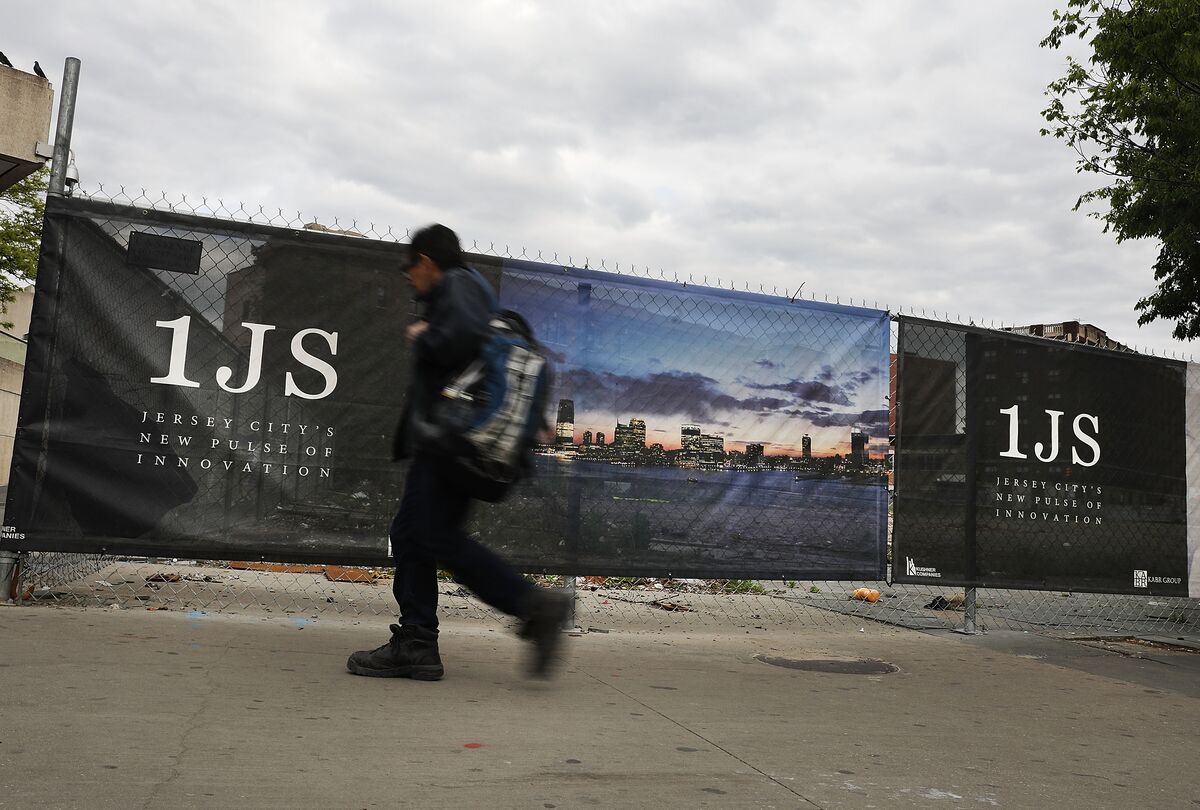
A troubled Kushner Cos. development in Jersey City, New Jersey, could be back on track after a recent meeting between patriarch Charlie Kushner and the city’s mayor.
A troubled Kushner Cos. development in Jersey City, New Jersey, could be back on track after a recent meeting between patriarch Charlie Kushner and the city’s mayor.
The project, known as 1 Journal Square, suffered setbacks last year including the exit of its anchor tenant, the loss of millions in tax breaks and a soured relationship with Mayor Steven Fulop.
Now the mayor has dropped his opposition, and the Kushners have secured a $57 million loan for the project.
A Democrat and ally of Charlie Kushner, Fulop had once supported the effort. He did an about-face during his re-election campaign last year amid concerns that the Kushners had improperly tried to leverage their family’s White House connections -- Charlie’s son, Jared, is President Donald Trump’s son-in-law and a senior adviser -- to attract Chinese investors using a controversial U.S. visa program. Jersey City is fiercely liberal and voted overwhelmingly for Hillary Clinton over Trump in 2016.
After Fulop won re-election in a landslide, Charlie Kushner met with him for “a very high-level discussion regarding the future of Journal Square and the eyesore in the middle of the transit hub” that’s owned by KABR Group, a Kushner Cos. partner in the project, a spokeswoman for the mayor said by email. “The mayor didn’t indicate any support for the project as there isn’t a formal proposal or application to review.”
Christine Taylor, a spokeswoman for Kushner Cos., said Kushner and Fulop discussed possible incentives for Journal Square. The company is assessing several options for additional financing, but EB-5 visas aren’t being considered, she said, adding that Kushner Cos. plans to be “shovel ready” sometime in 2018.
Trump’s Rise
Fulop and Charlie Kushner are old allies whose relationship was damaged by Trump’s ascent to the White House, which prompted Charlie’s son, Jared, to step down as chief executive officer and join the administration. Kushner and KABR previously donated $100,000 to a nonprofit that Fulop supporters helped set up in 2014 to promote progressive causes such as worker safety.
Fulop wrote a letter to the New Jersey Economic Development Authority sometime before mid-November 2015 in support of the Kushners’ plans at 1 Journal Square. The city was also in talks to issue $10 million of redevelopment bonds for the project. But Fulop dropped his support after news broke of the investor pitches in China.
“The administration made clear to the applicant that the city is not supportive of their request and while the law requires a first reading ordinance vote if they submit an application, I don’t foresee the council voting in favor,” Fulop wrote on Facebook.
Fortress Loan
After the missteps, Kushner Cos. and KABR were left to redraw building plans, restructure the project’s financing, and firm up support with state and local officials. That effort is now taking shape. In October, Fortress Investment Group issued a $57 million loan for the project, according to Taylor and the register’s office of Hudson County New Jersey.
In addition to the Fortress loan, other pieces are coming together for Journal Square. Kushner Cos. presented a new plan to Jersey City’s planning board in September, and the body unanimously approved plans for two 56-story towers on top of a 10-story structure, with more than 1,500 residential units.
Future approvals could face some resistance, but political winds are now behind Fulop.
“Although he created an uproar over his opposition to the previous Kushner abatement application, it was in a political atmosphere and it served Fulop’s interests,” said William Matsikoudis, Jersey City’s former city attorney, who ran unsuccessfully against Fulop in November. “As I predicted, Kushner will get an abatement. Let’s just hope it is on the merits.”
Project’s Financing
Other obstacles remain. For one thing, the project needs more financing. Earlier versions called for more than $200 million of capital, including $124 million of loans, according to documents filed with the state’s development authority.
For now, it will also have to be built with fewer incentives. The earlier iteration had $93 million in public subsidies lined up because it was going to be custom-built for WeWork, the co-working startup that has since backed out. A December plan calls for a relatively small $33 million in state incentives.
There is also an investigation by the Securities and Exchange Commission, which has sought information from Kushner Cos. about its use of the EB-5 program.