 US Market


Macron Left on His Own With Bespoke Iran Plan Tailored for Trump
It can be a lonely business being Donald Trump’s friend.
It can be a lonely business being Donald Trump’s friend.
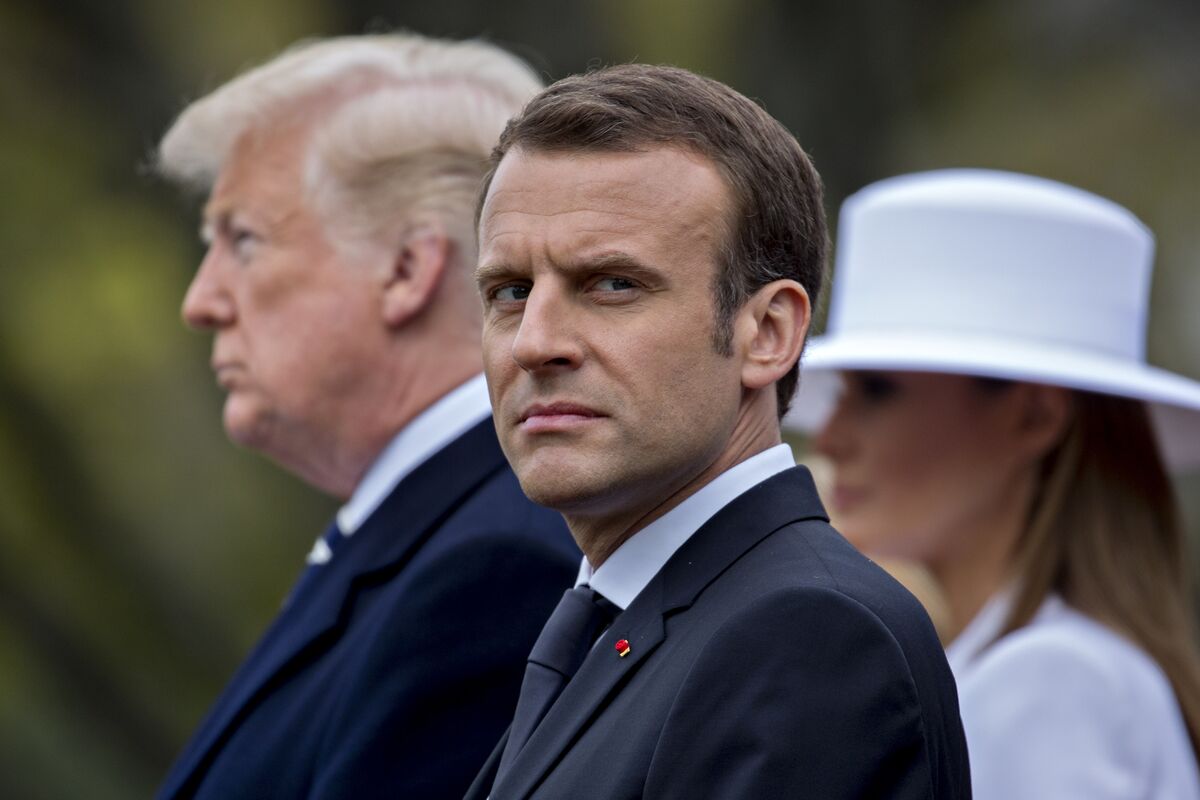
French President Emmanuel Macron arrived in Washington this week looking to use his special influence with the U.S. leader to bring him back into the international fold. After three days of improvised diplomacy, petty humiliations and West Wing tirades, Macron finds himself spearheading a new initiative to contain Iran, unsure of either the support of Trump or his fellow Europeans.
“Macron has put himself in a risky corner with this visit,” said Bruno Cautres, a political analyst at Paris-based Sciences-Po. “He got way ahead of himself and it could be problematic -- for his image and with his European allies. The next couple of weeks will be crucial for his credibility.”
As soon as he arrived in Washington, a searing Trump broadside made it clear that Macron’s goal of persuading the U.S. to stay in the Iran nuclear accord stood little chance. So Macron changed tack, pitching a “new deal” that would add on extra commitments to address U.S. concerns on Tehran’s broader influence in the Middle East.
The French leader said late Wednesday that his diplomatic adviser had reached out to European counterparts to discuss the idea and insisted it was not “a personal action or initiative.” Indeed, Macron said he coordinated with Germany’s Angela Merkel, who is due to visit the White House herself on Friday.
Europe Split
All the same, France’s European Union partners were still left without all the elements of Macron’s plan, according to two EU officials. The French will need to brief the rest of the EU on some issues that weren’t discussed in advance, the officials said. The bloc’s foreign-policy chief, Federica Mogherini, gave short shrift to the idea of a new round of negotiations to replace the existing deal, known as the JCPOA.
“The deal we have in place now today, the only existing deal for the moment, is working,” Mogherini told reporters in Brussels Wednesday after Macron had floated his plan for a new accord. “The full implementation of the JCPOA is essential for European security and for the security of the region.”
While the issue of Iran dominated much of the visit, Macron was more optimistic of achieving something on his second big priority -- averting punitive U.S. tariffs on European steel and aluminum. The French leader said he believes that in the end Trump will agree to exempt the EU, though here too he received no assurances.
“That’s my bet,” he said. “A trade war between allies doesn’t make sense.”
Broader Risks
Much of the visit was given over to choreographed diplomacy, with pictures of Macron and Trump with the respective first ladies, Brigitte and Melania: planting trees, beside the presidential helicopter, at a state dinner at the White House.
The niceties were put on hold on Wednesday when Macron delivered a speech to a joint session of Congress, in which he outlined the alternative to Trump’s world view: nations working together to boost trade, keep the peace and defend the middle classes.
While standard fair for a European audience, the speech divided his American listeners. Macron’s prediction that the U.S. will one day return to the Paris Climate Accord -- reversing Trump’s decision to pull out last year -- was met by cheers from Democratic lawmakers. And a poker face from Vice President Mike Pence.
It’s Not Personal
On Iran, Macron later explained that he wants to to keep Trump engaged and to have a “diplomatic framework” in place so that relations with Tehran don’t “fall into a sort of void” if and when the U.S. pulls out of the nuclear deal. Trump has to decide by May 12 whether to extend a sanction waiver for Iran. If he doesn’t, he’s effectively pulling out.
“I have no insider information on what the U.S. president will decide on the Iranian accord,” Macron told reporters toward the end of his three-day visit. “But I have the same senses as you -- including sound -- and I think I have heard over again from his campaign to yesterday’s press conference that he doesn’t have a ferocious desire to maintain it. Do I take this personally? No.”
But the risk is broader than the Iran issue, with Trump’s willingness to tear up international treaties threatening to destabilize relationships in all sorts of other areas, not least the potential talks on North Korea’s nuclear program. That unpredictability can work in the short term, Macron said, but -- speaking in English -- he added that it can prove “very insane” over time.
Having ultimately failed to win any guarantees from Trump on his main policy goals, Macron hands on the baton to Merkel, with whom he met last week in Berlin to coordinate their respective visits. She is due to arrive in Washington on Thursday evening, without the luxury of a close personal relationship with Trump.
Macron’s main takeaway from the first state visit of the Trump White House is that the U.S. president has a very different understanding of international diplomacy.
“I think his experience with North Korea is that when you are very tough, you make the other side move and you can try to go to a good deal or to a better deal,” Macron said.
— With assistance by Wes Kosova