 US Market

Stock Activity:
ALL USD Stocks

Chat Now !

Stocks Struggle for Direction as Turmoil Lingers: Markets Wrap
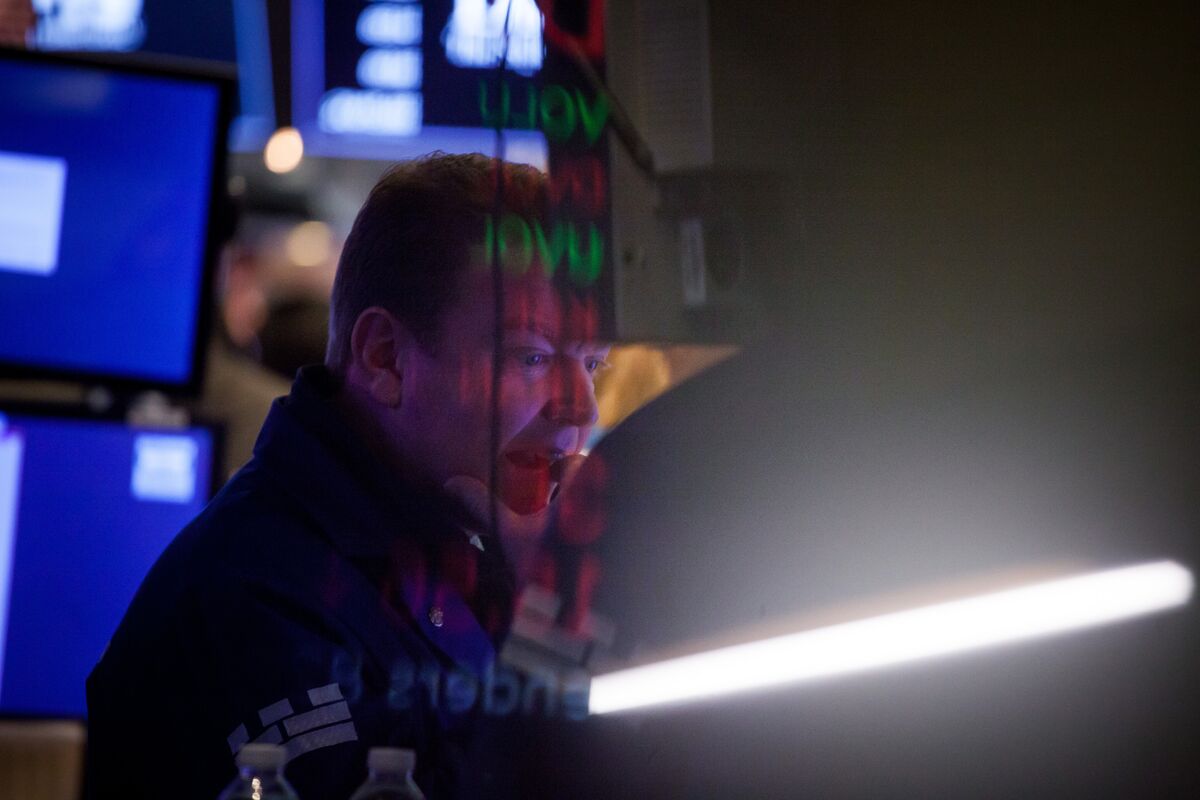
Aftershocks from the global stock selloff continued to reverberate around markets on Thursday, with European shares falling, Asian equities rising and U.S. futures fluctuating. China’s yuan at one point dropped the most since August 2015.
Aftershocks from the global stock selloff continued to reverberate around markets on Thursday, with European shares falling, Asian equities rising and U.S. futures fluctuating. China’s yuan at one point dropped the most since August 2015.
The Stoxx Europe 600 Index declined, with miners leading the retreat as most country benchmarks in the region fell. Earlier, shares in Japan closed higher after a turbulent session while China’s stocks fell for a third day, even as Hong Kong equities climbed. S&P 500 Index futures swung between gains and losses after falling in Asia trading.
U.S. 10-year Treasuries were steady after weak demand at a bond sale Wednesday pushed the yield back toward the recent four-year high. The pound drifted higher before a Bank of England rate decision, and the euro weakened as ECB member Jens Weidmann said the central bank will monitor the impact of the currency on inflation.
Traders remain on edge after the resurgent threat of inflation and higher bond yields helped trigger a burst of volatility and a pullback across the overheated global equity market. Against a backdrop of solid fundamentals -- synchronized growth and strong corporate earnings -- investors would normally step in to buy the dip, but government rates remain under pressure and this week’s Treasury auctions have underwhelmed, raising the prospect that the debt selloff could resume.
“There are a lot of risks ahead and we’ve been lulled into a false sense of security over the last couple of years with central banks keeping rates low for a very long time,” Steve Goldman, Kapstream Capital head and portfolio manager, said on Bloomberg TV. “Risk assets are going to continue to perform well albeit with a lot more volatility than what we’ve seen in the past.”
In Asia, the yuan earlier fell the most since the currency’s devaluation in August 2015 after China reported a much narrower-than-expected trade surplus as imports jumped. The country has resumed its Qualified Domestic Limited Partnership plan after a two-year halt, granting licenses to about a dozen global money managers that can raise funds in China for overseas investments, Reuters reported on Thursday, citing people it didn’t identify. Increasing imports and investment overseas both contribute to a weaker currency.
Elsewhere, the New Zealand dollar fell after the central bank delayed the timing for when it expects to reach it’s inflation target and cut its growth forecast. Oil extended a slide after a report showing record crude production from U.S. fields.
Terminal users can read more in our markets blog.
Here are some events scheduled for the remainder of this week:
- A host of ECB speakers are on the schedule on Thursday.
- The U.K.’s monetary policy decision is due the same day. Mark Carney may flag more tightening this year if the economy remains on its current path, and analysts expect the BOE to upgrade its quarterly outlook.
- Earnings season continues with reports from companies including Philip Morris, L’Oreal and Twitter.
And these are the main moves in markets:
Stocks
- The Stoxx Europe 600 Index declined 0.8 percent as of 11:07 a.m. London time.
- Futures on the S&P 500 Index fell 0.3 percent.
- The MSCI Asia Pacific Index gained 0.3 percent, the first advance in a week and the biggest rise in almost two weeks.
- The U.K.’s FTSE 100 Index sank 0.9 percent.
- The MSCI Emerging Market Index dipped 0.3 percent, hitting the lowest in more than five weeks, with its sixth straight decline.
Currencies
- The Bloomberg Dollar Spot Index climbed 0.2 percent to the highest in more than three weeks.
- The euro dipped 0.2 percent to $1.2239, the weakest in almost three weeks.
- The British pound rose 0.1 percent to $1.3896, the first advance in a week.
- The Japanese yen declined 0.3 percent to 109.65 per dollar.
- South Africa’s rand sank 0.5 percent to 12.1353 per dollar, the weakest in almost three weeks.
- The MSCI Emerging Markets Currency Index dipped 0.7 percent to 1,703.81 per euro, in the largest decrease in almost nine months.
Bonds
- The yield on 10-year Treasuries fell less than one basis point to 2.83 percent.
- Germany’s 10-year yield climbed less than one basis point to 0.75 percent.
- Britain’s 10-year yield dipped one basis point to 1.542 percent.
Commodities
- West Texas Intermediate crude decreased 0.6 percent to $61.44 a barrel, hitting the lowest in almost five weeks.
- Gold fell 0.6 percent to $1,311.01 an ounce, the lowest in almost six weeks.
Terminal users can read more on this week’s market turmoil in these Bloomberg stories:
- Map to the Underworld: $2 Trillion of Volatility Trades Here
- How Does the World End? Stock Markets After a Psychological Peak
- Good Is Bad, Bad Is Good and Trump Is Miffed at Stock Traders
- End of a Bull Market, or Nowhere Near? Making the Case for Both
- Credit Suisse Fund Liquidated, ETFs Halted as Short-Vol Bets Die
— With assistance by Ruth Carson, and Adam Haigh