 US Market

Stock Activity:
ALL USD Stocks

Chat Now !

Tesla Slows Red-Hot Cash Burn on Model 3 Progress, Deposit Boost

Tesla Inc. burned through cash at a slower clip as the electric-car maker made progress building more Model 3 sedans and took deposits for its Semi truck and Roadster sports car.
Tesla Inc. burned through cash at a slower clip as the electric-car maker made progress building more Model 3 sedans and took deposits for its Semi truck and Roadster sports car.
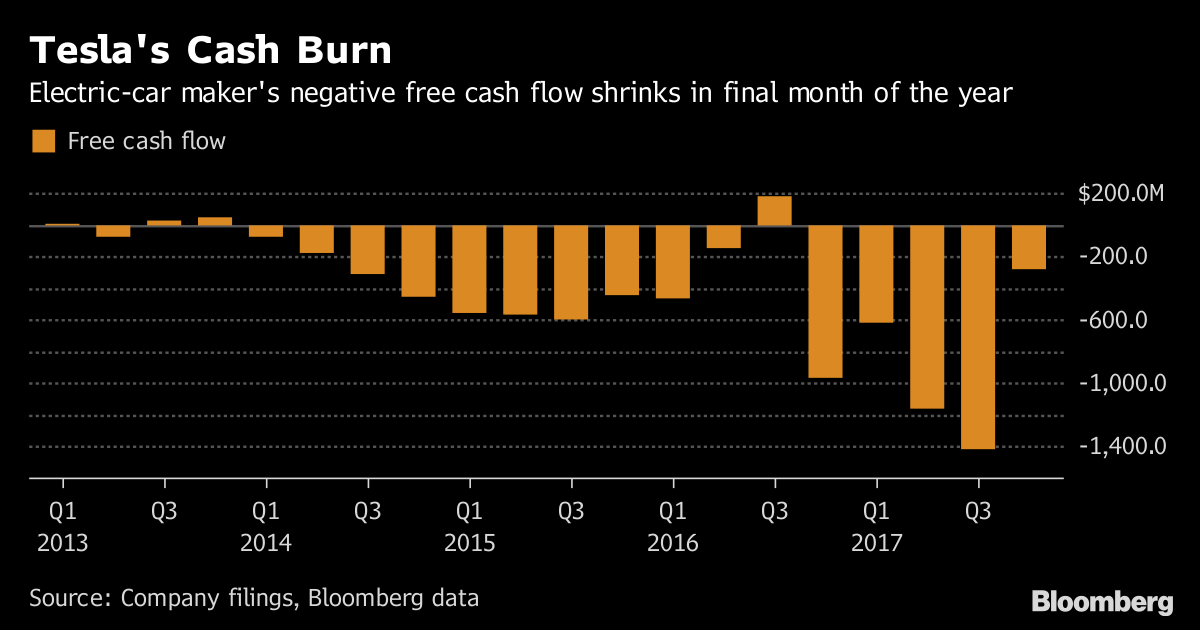
The company reported negative free cash flow of $276.8 million in the fourth quarter, the least in more than a year. Tesla conserved capital by ramping up output of the Model 3 and boosting customer deposits for the new models Chief Executive Officer Elon Musk showed in November.
Tesla's Cash Burn
Electric-car maker's negative free cash flow shrinks in final quarter of the year
Source: Company filings, Bloomberg data
Tesla remains on track to meet its goal to build 5,000 Model 3 sedans a week by the end of June, a target Musk has delayed several times. It’s been banking on the car -- its most affordable car yet -- to help build more of a mass market for electric vehicles.
The slow ramp up in Model 3 production has limited the amount of money coming in from customers taking delivery, which was raising concern on Wall Street about whether the company had enough cash. It finished the fourth quarter with $3.4 billion.
Most analysts forecast more fundraising sometime this year, though timing is still up in the air. Barclays analyst Brian Johnson said Tuesday he expects a $2.5 billion equity raise, adding that Tesla is “burning cash like rocket fuel” -- a nod to Musk’s other company, Space Exploration Technologies Corp., and its launch of the world’s most powerful rocket on Tuesday.
Musk -- whose additional gigs span from space exploration to hyperloop travel -- is seen by investors as key to Tesla’s future success. To keep him around for the long haul, the company last month proposed an unprecedented pay package for the 46-year-old CEO that strictly ties his compensation to stock performance and profit.
The plan, which needs shareholder approval in March, would make Musk perhaps the richest man on the planet if he follows through on making Tesla one of the world’s most valuable companies. It requires that Musk remain Tesla’s CEO or serve as executive chairman and chief product officer, potentially paving the way for the company to eventually hire a successor.