 US Market

Stock Activity:
ALL USD Stocks

Chat Now !

Turkey Launches New Syria Offensive Against Kurdish YPG in Afrin
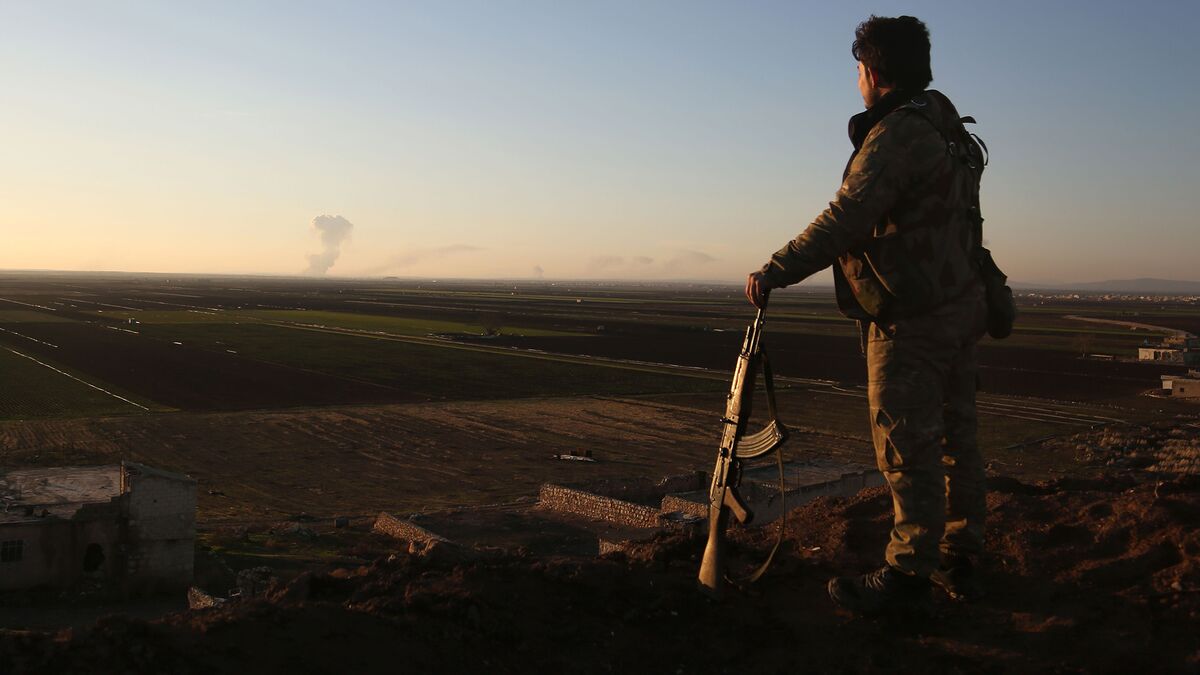
Turkey launched airstrikes against Kurdish separatist fighters and Islamic State positions in northwest Syria Saturday after President Recep Tayyip Erdogan ignored calls from the U.S. to avoid attacking Afrin.
Turkey launched airstrikes against Kurdish separatist fighters and Islamic State positions in northwest Syria Saturday after President Recep Tayyip Erdogan ignored calls from the U.S. to avoid attacking Afrin.
Turkish F-16s fired missiles at Kurdish YPG and Islamic State positions, NTV Television reported, and the army said warplanes used Syrian airspace. At the same time, Turkey-backed Syrian rebels from the Free Syrian Army began advancing toward Afrin in Syria’s northwest from the town of Azaz.
Turkey is using self-defense under international law and the “Olive Branch” operation is aimed at eliminating Kurdish PYD/YPG forces along with the Islamic State, the army said, accusing the YPG of using civilians as human shields. Turkey has been outraged by plans to create a border security force using thousands of Kurdish fighters by the American-led coalition against the Islamic State, saying the Kurdish fighters have designs on Turkish territory.
While U.S. officials have denied the formation of such a force, Erdogan on Saturday accused America of trying to deceive Turkey.
“The operation in Afrin has effectively started and will be followed by Manbij,” Erdogan said, referring to another Kurdish stronghold on the western bank of the Euphrates River.
Explosions Seen
Loud explosions and huge flames, followed by grey smoke billowing from targets can be seen from the Turkish border, according to footage on NTV Television.
The operation is likely to escalate tensions between the U.S. and Turkey, which has accused Washington of overarming Kurdish forces and encouraging separatist aspirations. The Kurds were Washington’s most trusted force in the U.S.-led campaign to drive Islamic State extremists from Syria, but Turkey’s government says they work hand-in-hand with PKK militants who have been battling for autonomy in Turkey’s southeast since the 1980s.
The PKK is classified as a terrorist organization by the U.S. and European Union, as well as Turkey.
“Turkey is capable and determined to eliminate every kind of threat against it,” Foreign Minister Mevlut Cavusoglu said on Twitter soon after receiving a call from U.S. Secretary of State Rex Tillerson.
Tillerson’s Comments
Tillerson was reported on Wednesday denying that a border security force will be established, saying the issue has been “misportrayed.” Earlier this week, the U.S.-led coalition against Islamic State confirmed that such a unit was to be built.
Cavusoglu said Turkey wasn’t satisfied with the U.S. explanation, while adding that it has no interest in colliding with the U.S. over the operation. The offensive in Afrin would not directly entangle U.S. troops, which are embedded with Kurdish fighters in the country’s northeast.
Russia’s defense ministry said the main trigger for the escalation was provocative steps taken by the U.S. aimed at isolating areas with predominantly Kurdish populations. It said measures have been taken to ensure the safety of its servicemen in Afrin, and some troops have been relocated. Russia’s foreign ministry said it’s treating the developments with “concern.”
“We call on the opposing sides to exercise mutual restraint,” the foreign ministry said in a statement. “The main goal of the remaining Russian troops in Syria is to maintain the ceasefire in the de-escalation zones.”
Turkey’s lira had weakened earlier this week over the likelihood of a campaign in Syria and a deteriorating current account.
— With assistance by Natasha Doff